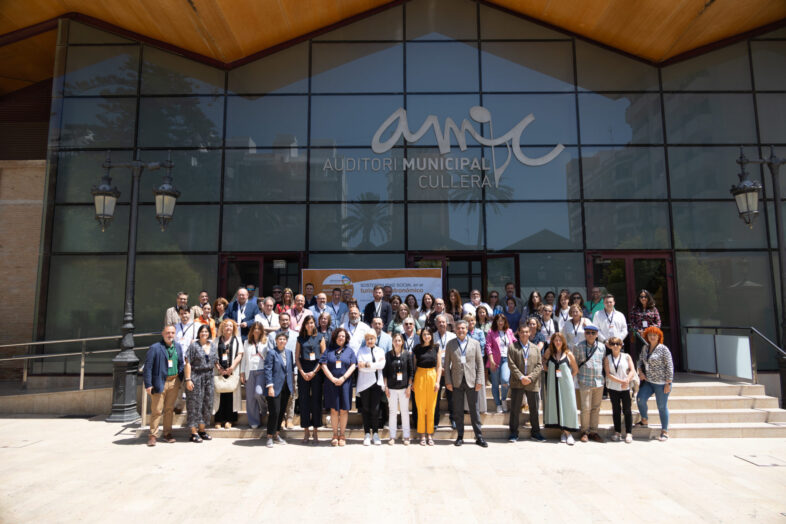
Today, the Technical Conference on Wine and Gastronomy Destinations took place at the Municipal Auditorium of Cullera, organized by Saborea España.
The event was inaugurated by Susi Díaz, María Velasco, and Jordi Mayor, followed by the opening lecture on social sustainability in gastronomic tourism, presented by Ana Muñoz, Deputy Director General for Tourism Development and Sustainability, and Vicent Martín, from the Bancalet project in Dènia.
First Panel Discussion
The first panel discussion, moderated by Emilio Gallego, addressed the feasibility of social sustainability in gastronomic tourism. The most important points discussed included:
- Virginia Borges, General Director of Tourism and Territorial Promotion of La Rioja, emphasized the importance of integrating sustainable practices into regional tourism development, promoting a model that balances economic growth with environmental conservation and social well-being.
- Blanca Jiménez, President of the Association of Gastronomic Destinations and Councilor for Tourism in Valladolid, stressed the need for local policies supporting sustainability, ensuring that municipal initiatives align with sustainability objectives to maximize their impact.
- María Velasco, Advisor to the Cabinet of the State Secretariat for Tourism, discussed the coordination between administrations and the private sector, highlighting that public-private collaboration is crucial for developing effective and sustainable gastronomic tourism strategies.
- Isabel García, Manager of the Ribera del Guadiana Wine and Cava Route, highlighted the economic and social benefits of sustainability for local communities, stating that a sustainable approach not only enhances the tourist experience but also strengthens local economies and social cohesion.
Second Panel Discussion
The second panel discussion focused on marketing and communication strategies for responsible wine and gastronomy tourism experiences within local communities, moderated by Juan Manuel Guimeráns.
The key points discussed included:
- Xanty Elías, Chef and owner of Finca Alfoliz, shared strategies for promoting sustainability through gastronomy, suggesting that chefs and restaurateurs can act as sustainability ambassadors by promoting local ingredients and traditional culinary techniques.
- Julio Jiménez, Creative Director of Tech, Brands & Stories, presented innovations in digital communication to attract conscious tourists, showing how digital platforms can be used to highlight sustainable practices and educate visitors about the positive impact of their travel choices.
- Jorge Lamirán, Head of Product and Communication at Viajar en Familia, spoke about the importance of personalized and authentic experiences, arguing that tourists increasingly seek experiences that allow them to genuinely connect with local cultures and communities.
- Marta Tirado, Councilor for Tourism in Cuenca, emphasized the collaboration between different tourism stakeholders to strengthen the positive impact on local communities, mentioning that effective coordination between local governments, tourism businesses, and community organizations is essential for developing sustainable destinations.
Afternoon Business Workshops
In the afternoon, practical business workshops showcased social sustainability initiatives in gastronomy:
- First Workshop (16:00-17:00 h): Successful gastronomic tourism business cases in developed tourist areas, moderated by Alberto Galloso, CEO of Saó Viajes Naturales.
- Participants: José Palacios (Artesanos del Arroz, Cullera), David Puerto Román (Bodegas Cayetano del Pino, Vinos de Jerez), and Fabián Ben (Project and Innovation Director, National Federation of Fishermen’s Guilds).
- The speakers shared their experiences and strategies for implementing sustainable practices in established tourist destinations.
- Second Workshop (17:00-18:00 h): Successful gastronomic tourism business cases in developing tourist areas, moderated by Enrique Moltó from the Mediterranean Gastronomy Center UA-Denia.
- Participants: Eloy López de Foronda (Advisor to the Board of Directors, METRAE), María Amores del Rey (Marketing and Communication Manager, Montes Norte, Ciudad Real), and Nani Arenas (Tourism Communication Consultant, Oviedo).
- Discussions focused on the opportunities and challenges of implementing sustainability in emerging destinations.
Conclusions from Saborea España
The Technical Conference on Wine and Gastronomy Destinations in Cullera was a resounding success, reinforcing the importance of social sustainability in gastronomic tourism.
The key takeaways included:
- The need for local policies supporting sustainability.
- The coordination between administrations and the private sector.
- The development of personalized and authentic tourism experiences.
- The workshops demonstrated how innovation and sustainability can coexist and thrive in gastronomic tourism.
The event concluded with a cultural visit to Cullera Castle, highlighting the city’s rich historical heritage.